


The rumored folding phone by Apple is becoming a reality with each new bit of information surfacing.With chatter building fast, one thing grabs attention more than others. The tech giant might reintroduce Touch ID – but longer this time. That’d mean a noticeable change in their approach to locking phones, at least for this version.
The concept of a bendable iPhone’s been bouncing around forever. Lately, rumors say Apple’s nearly settled on how it’ll look. Some think we could see it by 2027 – though others stick to 2026 – with initial manufacturing already kicking off. Even though they haven’t confirmed anything out loud, clues are stacking up fast. All signs hint at real progress behind closed doors.
Table of Contents
Apple Foldable iPhone: Touch ID Makes a Surprise Return
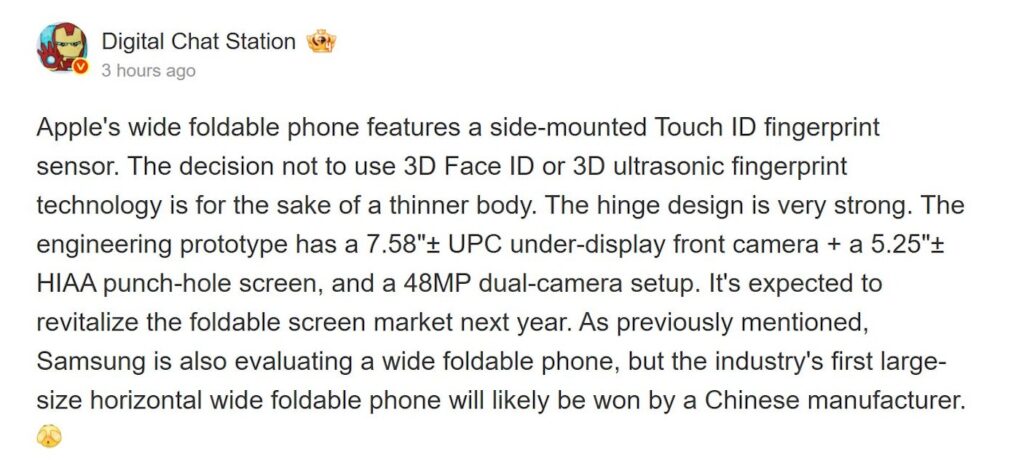
One big change everyone’s chatting about? Ditching Face ID. Rather than scanning your face, the folding iPhone might use a fingerprint reader built into the side button. Think of it like the ones found on certain iPads today.
The reason feels down-to-earth. Since a folding phone packs tightly, there’s barely any leftover space. Face ID requires multiple pieces – sensors, cameras – that hog area. Inside a gadget that bends shut, even tiny gaps count. Instead, a side-mounted scanner takes up less space and slips in smoothly.
This decision isn’t about Apple saying Face ID fails. It’s more like picking what works best for how things are built. While Touch ID handles plenty of everyday moments just fine – say, your phone lying still or you wearing a face covering – it fits better here. Since this gadget’s all about adaptability, going this route feels natural.
Foldable iPhone: A Focus on Thin Design
Apple’s said to want a super slim design for its first Apple Foldable iPhone. Still, most current folding phones struggle here – too thick when shut. Some seem clunky in hand. Others just don’t fit right in your jeans.
To dodge that issue, maybe Apple’s ditching every bit that puffs it up. That’s why high-end scanners – say, ultrasound ones buried in the screen – aren’t showing up here. Instead, a basic sensor built into the side button trims thickness without flaking out.
The aim looks straightforward. Yet Apple’s trying to make the folding iPhone seem regular once shut – more natural, less like a bulky tool screaming how fancy it is.
Foldable iPhone: Strong Hinge, Solid Build
Being slim doesn’t equal flimsy. Signs point to Apple focusing hard on the hinge, since it bears the most strain in foldable phones. If the hinge isn’t solid, you might get screen issues, wobble, or even breakage down the line.
The latest model reportedly relies on a super sturdy hinge setup. At the same time, some sources point to liquid metal components being involved. Known for its mix of toughness and bendability, this stuff works well in foldable iPhone designs.
Around the inside, Apple could have added a special metal layer under the screen. Because of it, pressure gets shared more evenly during folding. That way, they’re hoping to weaken the line that usually shows up in bendy displays. Less visible lines lead to a cleaner surface, plus lower stress on the display itself.
Apple Foldable iPhone: Display Sizes and Screen Style
The foldable iPhone might go with a flip-open layout. Once unfolded, the main display may measure about 7.6 inches. That’d put it near mini tablets in dimension – so better for watching clips, browsing, or handling multiple tasks at once.
The inner screen could tuck the front camera beneath it. That way, no notch or hole is poking into the view. But the outside display – used while the device stays shut – is said to measure around 5.2 inches. For fast snaps and calls, this panel might still show a cutout where the lens peeks through.
This setup offers folks two straightforward options. One’s a small phone good for fast jobs, while the other brings a bigger display when you’re using it more.
Apple Foldable iPhone: Camera Setup Stays Premium
Apple won’t cut corners on camera performance – especially if it shifts to a folding design. Instead of sticking with older tech, the upcoming flip-style iPhone might pack two back cameras, each hitting 48 megapixels.
Apple’s likely aiming for camera performance similar to its standard iPhones. A bigger frame could assist in managing heat while allowing better lens setup, boosting overall photos.
A solid camera matters. Most people want their phone to take good pics or record clips – no letdowns – even if the look feels fresh.
Expected Launch and Price
Apple hasn’t said when it’ll come out, yet clues suggest around late 2026. That stretch lets them tweak the design while checking how tough it is. While they usually jump in after rivals, their thing is nailing the details once they do.
Price guesses put the folding iPhone at around two grand to two-point-five thou. That lands it right in the high-end zone. Apple’s not chasing cheap models. Rather, they’re going for a sleek pick aimed at folks after something unique – who’ll shell out extra without fuss.
What This Means for Apple Fans
If those rumors are true, Apple’s foldable iPhone won’t follow what others do. Instead, it’ll take known features but tweak them for a fresh gadget. Bringing back Touch ID isn’t moving backward – rather, it’s about keeping the build slim while staying practical every day.
The foldable iPhone might seem less like a test run, instead coming off as a logical step in Apple’s evolution. Focusing on solid construction, display layout, or handy functions shows they’re aiming far ahead.
Right now, everyone’s waiting to see what slips out next or gets whispered about. Should Apple go through with it, its debut folding phone might change how these gadgets are supposed to work.