

The Samsung Exynos 2600 – soon to be in the Galaxy S26 lineup – is a big move for Samsung. Rather than merely cramming the chip, this chip is loaded with a rare addition, a physical heatsink fitted directly into its silent cooling system. There is little information about the intent, but clues suggest it might be the most challenging Exynos model in years. Then, suddenly, a new technology called Heat Pass Block changes the dynamics of heat distribution in compact devices.
The purpose of the Samsung Heat Pass Block is to make the Exynos 2600 stable
According to South Korean sources, Samsung announced its Heat Pass Block (HPB) to the press as early as November 11, 2025. The concept? Very simple: it is a cooler made of copper, thus extracting heat from the CPU without the need for power. What differs, however, is that it is baked into the chip itself. It is like everything is one unit, not two bits glued together.
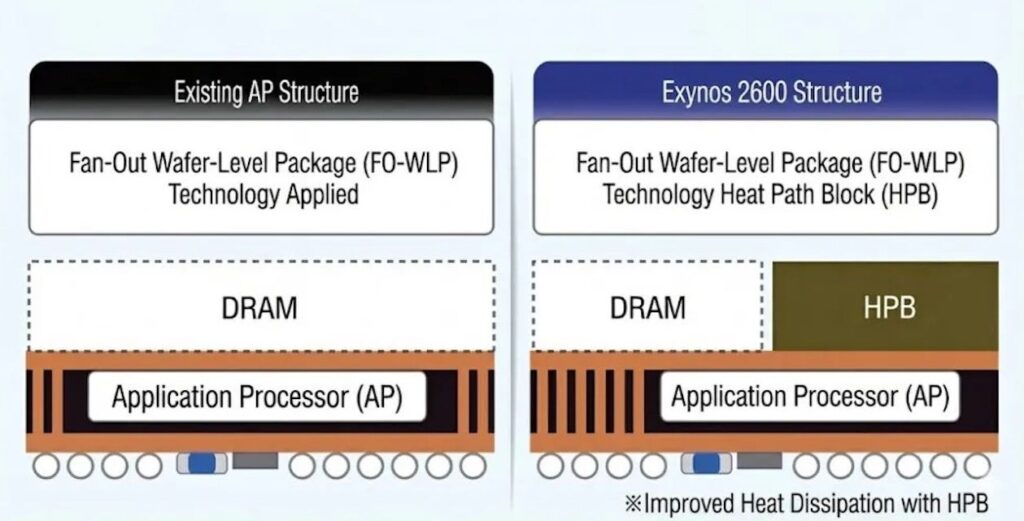
The Exynos 2600 marks the debut of this particular layout. Besides that, it’s the first instance of a passive radiator in a portable device. Usually, such cooling bits are found in bigger systems – think desktops or servers. According to Samsung, this updated configuration improves heat management by nearly one-third compared to the older version.
This change marks a turning point for phone cooling overall – especially for Exynos 2600. Heat-related slowdowns have plagued Exynos processors for years. Once things heat up, performance drops to avoid damage. HPB may fix this problem entirely. Should it deliver on promises, Samsung could regain confidence in its chips while pushing rivals like Qualcomm, Apple, and MediaTek to rework how they handle overheating.
Exynos 2600: A setup able to shift how things work across the field
Some sources say Samsung might allow external firms access to its chip manufacturing facilities, while granting them the right to use HPB tech. Should this go through, the entire semiconductor scene could shift in significant ways.
TSMC currently makes almost every high-end chip – like Qualcomm’s Snapdragon 8 Elite Gen 5, Apple’s A19 and A19 Pro, along with MediaTek’s Dimensity 9500. Should major players start using HPB instead, part of that manufacturing might move elsewhere. That kind of change could disrupt old alliances, pushing firms to rethink who builds their key processors and under what conditions.
The next change? If HPB turns off thermal throttling on many current chips, phones might keep running fast without unexpected drops in performance due to overheating. That’d help people playing games, cutting videos, or juggling apps at once.
Still, it’s a balancing act. Tossing HPB into upcoming chips could bump up expenses. The setup seems trickier – might need extra work on the factory line. Since shortages are already nudging prices up, folks buying phones might pay more if this heat fix catches on.
This changes how future phones will work
The Exynos 2600 might be Samsung’s most significant step yet. Its cooling setup works more like a laptop’s instead of a smartphone’s. Should it perform as expected, this chip may redefine how phones handle overheating. That shift could put pressure on rivals such as Apple, Qualcomm, or even MediaTek.
The coming months should reveal more info, yet a single point stands out. Improved cooling leads to faster operation, which gives people tougher devices for daily use. Should Samsung’s Heat Pass Block match initial feedback, it could redefine how phone processors manage temperature down the line.