

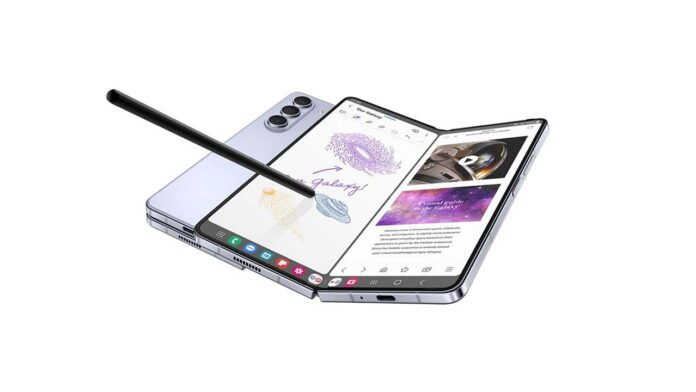
Samsung is poised to change the future of foldable phones. The company has patented a new type of display that can repair itself after minor damage. It could lead to foldable phones with built-in fingerprint sensors under the screen, without risking cracks or weak spots.
Table of Contents
Foldables Are Getting Better, but Not Perfect Yet
Foldable phones have improved a lot since the first Galaxy Fold. Samsung’s Z-series has become stronger and more reliable. At the same time, rivals like Huawei continue to experiment with complex designs such as the Mate XTs Ultimate Design. Still, most foldable phones remain delicate. Samsung’s new patent suggests the company wants to fix that problem for good.
What the Patent Reveals
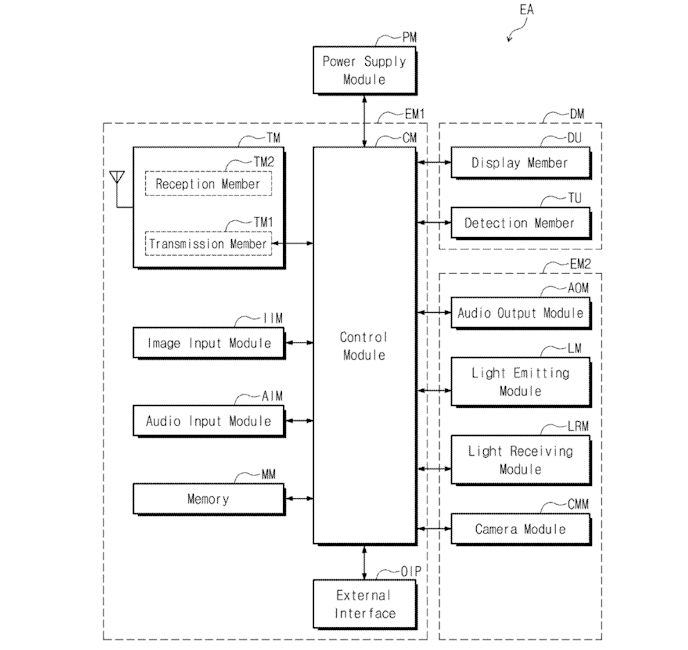
The patent, filed under the number US 12,437,686 B2, describes a foldable display that can detect and fix tiny cracks. It uses a system called a Crack Detection Wiring network, which identifies damage and starts a repair process at the microscopic level.
Although foldable phone hinges have become tougher, the display area remains a weak spot. That’s because manufacturers must carve out small spaces in the screen for the camera and sensors. These cutouts can make the display more prone to cracks and water damage, even if they’re invisible to the eye.
Phones such as the Galaxy Z Fold 7, Galaxy Z Flip 7, and Vivo X Fold 5 already show signs of these hidden stress points. Samsung’s new design aims to fix this by adding a sensing loop around these vulnerable areas. The loop continuously checks for early signs of damage and responds instantly when they are detected.
(Also see: Download Samsung Galaxy Z Fold 7 and Galaxy Z Flip 7 Wallpapers Collection)
How the Self-Healing Display Works
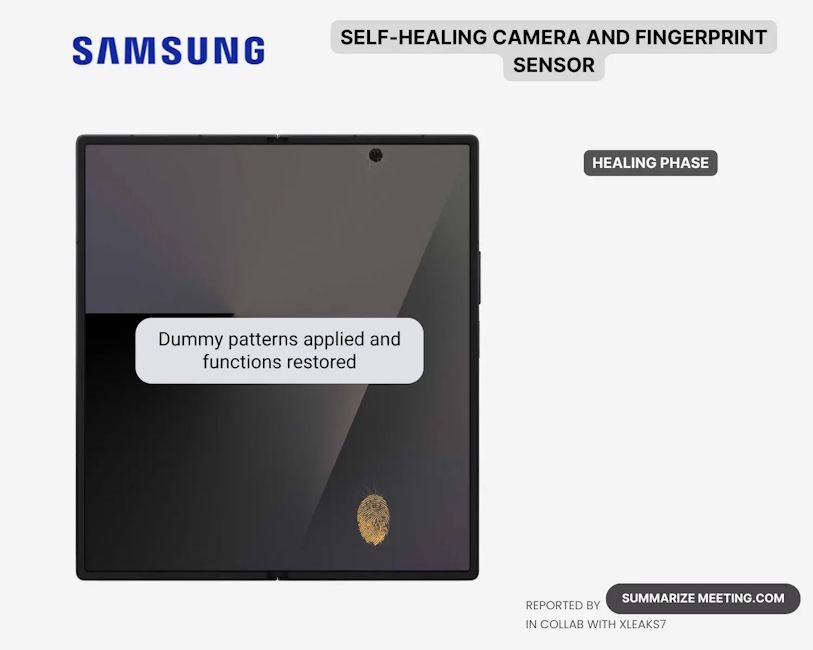
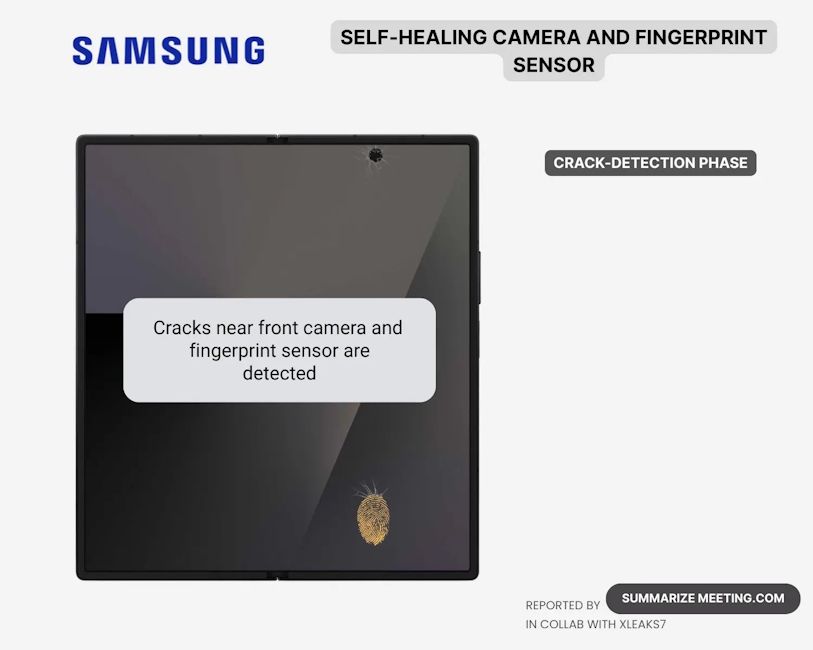
When the system finds microcracks, it activates ultra-thin conductive lines that start a self-repair process. This process uses what Samsung calls “dummy metal patterns,” which act like tiny repair patches within the screen. Together, they form the base of Samsung’s self-healing technology.
The patent also mentions other features, such as micro-grooved reinforcements and advanced sealing layers. These help protect the display’s Ultra Thin Glass (UTG) from air and moisture, helping keep it strong for longer.
A Step Toward Stronger Foldables
If Samsung manages to bring this technology into real phones, foldables could become far more durable. It could also allow Samsung to place fingerprint sensors directly under the display, removing the need for side-mounted readers on the Z-series.
Right now, this technology is still in development. Samsung hasn’t confirmed whether it will appear in the Galaxy Z Fold 8 or Z Flip 8. But the patent shows that Samsung is serious about addressing one of foldable phones’ most significant weaknesses—fragility.
With this kind of innovation, future foldables might not just survive everyday wear and tear but actually repair themselves, making them more durable and longer-lasting than ever before.